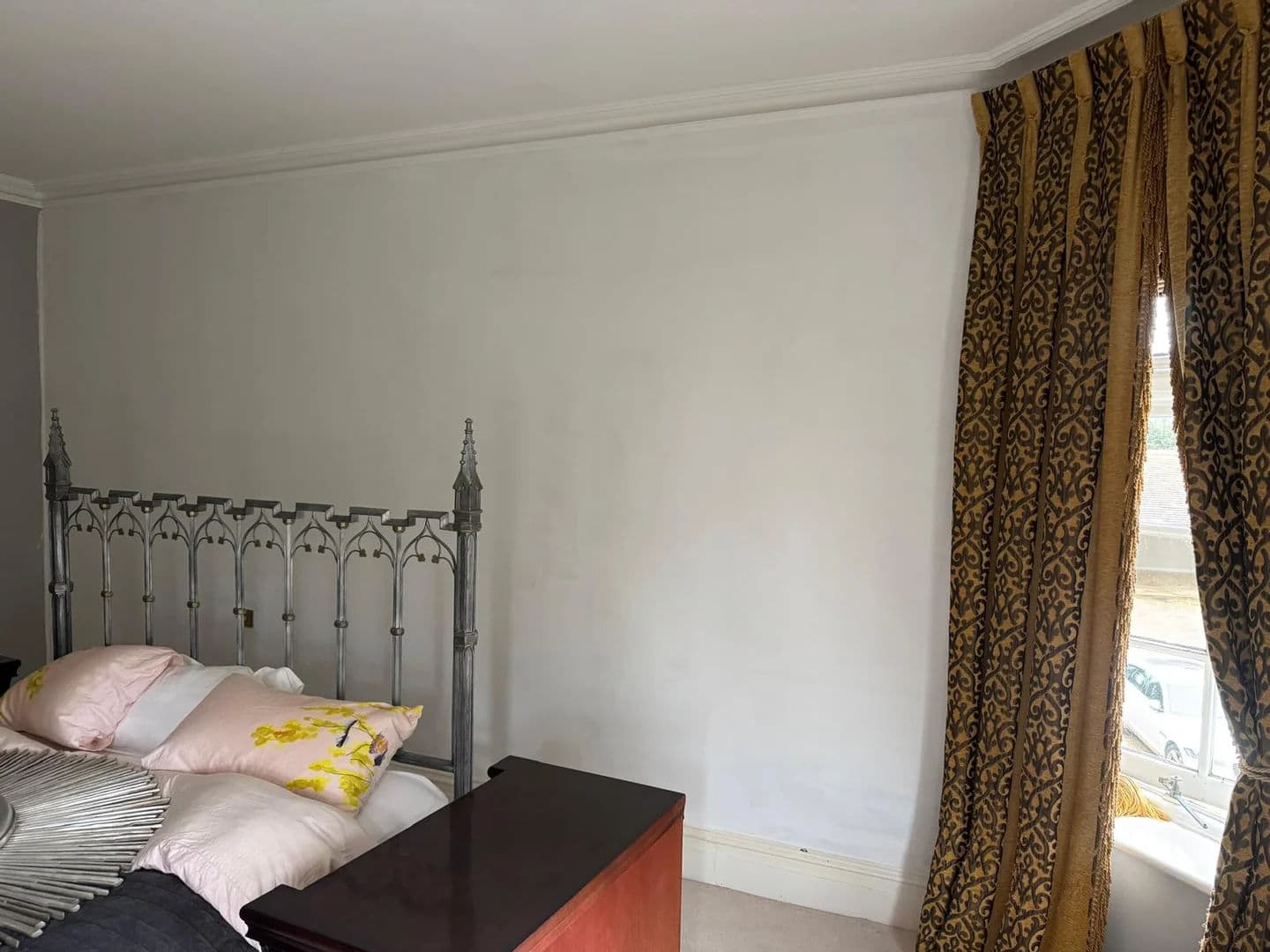
Why Period Properties Deserve Extra Care
Kent is full of period homes — Georgian terraces in Tunbridge Wells, Victorian villas in Sevenoaks, Edwardian semis across the Weald. These houses have features modern builds simply don't: deep skirtings, ornate cornices, picture rails, panelled doors, sash windows, and plaster ceiling roses. Decorate them badly and you can hide a century of character in an afternoon. Decorate them well and the whole house comes back to life.
Start with the Surfaces, Not the Colour
The most common mistake on period jobs is rushing to the paint tin. Old lime plaster, repeatedly skimmed and patched walls, original timber skirtings with a dozen paint layers, and hairline cracks around cornices all need different preparation to a new plasterboard partition.
What we check before a brush comes out:
- Existing paint — is it oil, water-based, or distemper? Distemper must be removed or sealed before modern paint will bond.
- Moisture — rising damp, penetrating damp, or breathable walls that don't want modern plastic paints.
- Settlement cracks vs. live cracks — filling a moving crack is wasted work.
- Layer build-up on joinery — sometimes the best decision is to strip back rather than add coat 15.
Choose Breathable Paints on Breathable Walls
Traditional lime plaster, solid brick walls, and lath-and-plaster ceilings were built to let moisture move through them. Seal them in with a plastic-heavy modern emulsion and you can trap damp, cause blown plaster, and make the problem worse.
On heritage jobs we often specify natural or breathable paints — Edward Bulmer, Little Greene's traditional ranges, Farrow & Ball's estate emulsion, or similar. They cost more, but on the right wall they save rework.
Respecting Original Features
Original cornices, ceiling roses, dado rails, and skirtings are what make a period room. A few principles we stick to:
- Don't bury the detail. Thick paint over decades fills in the sharp edges of a good cornice. Sometimes the right move is a careful strip-back before repainting.
- Use a satinwood or eggshell on joinery — full gloss tends to look plasticky in a period room; a softer sheen sits better with age.
- Pick-out colours in panelled rooms. Two-tone panelling (dado one shade, top half another) is a very period-correct look and is straightforward if the lines are already there.
- Mind the ceiling. A brilliant white ceiling in an original Georgian room often looks wrong. A soft off-white — Farrow & Ball's Strong White, for example — reads closer to how these rooms looked originally.
Colours That Work in Older Homes
Period rooms almost always have smaller windows and deeper reveals than modern rooms, so light matters. A few things we've learned:
- Deep greens, muted blues, and warm off-whites tend to sit very naturally in Georgian and Victorian rooms.
- Very cool greys often clash with original timber and warm flagstones — warm them up.
- Feature walls rarely work in a properly period room; the architecture is already the feature.
- Sample large. Pick a litre pot, paint a square metre on two different walls, and look at it morning, afternoon, and under lamp light before committing.
Woodwork, Panelling, and Wainscoting
A lot of our heritage work is on joinery — repainting panelled halls, hanging new doors to match existing, installing or restoring wainscoting. A few notes:
- Knots in older timber need a dedicated knotting solution before painting, or they'll bleed through the topcoat.
- Old oil paints sand to a powder; always wet-sand or use a proper P100 extraction sander to keep the lead-risk down on pre-1960s paint.
- Taping along carpet edges and using a good cutting-in brush beats masking tape for a crisp joinery line.
Windows and Sashes
Sash windows are a decorator's test. They need to open and close, so paint has to be applied thinly and allowed to fully cure before the sashes are closed. We always work sashes in stages — bottom sash up, top sash down, let it dry — so you don't end up with a window painted shut.
When to Get a Professional In
Some jobs are well within a confident DIYer's range — a simple wall repaint in a period room with sound plaster. Others aren't. Get a professional in when:
- You suspect distemper, lead paint, or asbestos in textured ceilings (common pre-1985).
- There are cracks around cornices, movement in walls, or damp you can't explain.
- The house is listed — listed building consent is sometimes needed for what looks like cosmetic work.
- You want original features restored rather than simply painted over.
Working on Period Homes in Kent
We've worked on Georgian townhouses, Victorian terraces, and Edwardian family homes across Tunbridge Wells, Sevenoaks, and the surrounding villages. If you've got a period property that deserves more than a standard repaint, get in touch for a free quote — we'll walk through the house with you, point out anything that needs attention before a brush goes near the walls, and give you a realistic plan.